

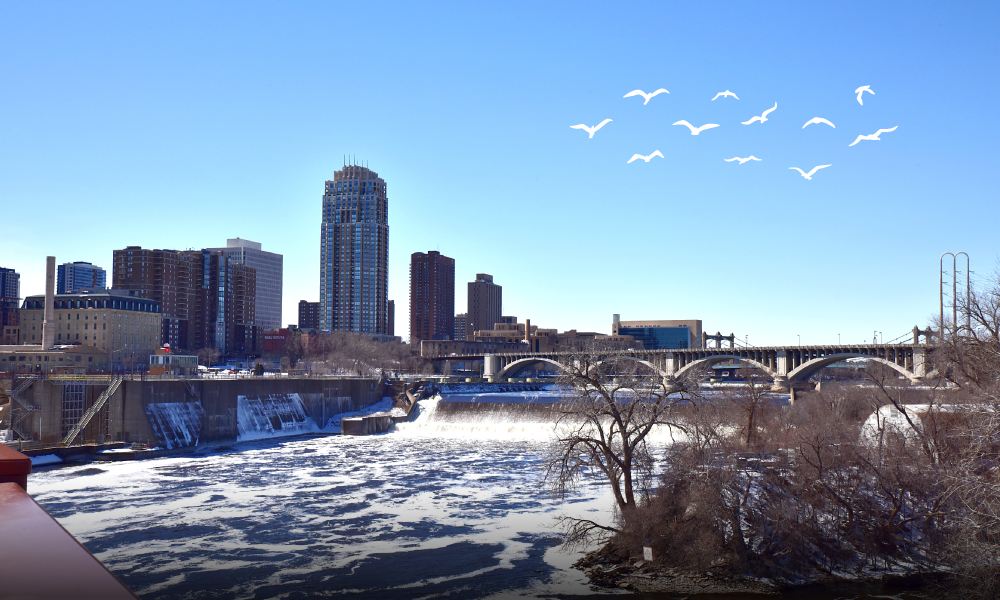
Minneapolis sits in that small group of American cities where you can cover a lot without spending half the day in traffic. Downtown, the Mississippi Riverfront, the Chain of Lakes, and the North Loop all offer different reasons to visit, and getting between them is straightforward.

That doesn’t mean every trip looks the same. The neighborhood you choose, the season you visit, and even the dates on the convention calendar can all change your budget and your schedule.
This Minneapolis Visitor Guide answers the questions most travelers have before booking, including where to stay, when to visit, how to get around, and how much to budget for the core Minneapolis visitor information you need before locking in dates.
| Book Hotels Near FIFA WC ’26 Stadiums |
|---|
Table of Content
Minneapolis Visitor Information
The practical details a first-time visitor actually needs before landing.
- Airport: MSP, connected to downtown by the METRO Blue Line light rail
- Nonstop destinations: 166 as of 2025, including a record 35 international routes
- Time zone: Central Time
- Climate: Hot summers, cold winters. Pack for both if traveling in a shoulder season
- Currency: US dollar; check a live converter rather than a fixed rate
- Tipping: 18–20% at restaurants, $1–2 per drink at bars, 15–20% for rideshare/taxis, $2–5 per bag for bellhops
- Cards vs. cash: Cards work almost everywhere, including transit machines; cash is rarely needed
- Emergency number: 911
- Drinking age: 21; bars can serve until 2 a.m.
- Smoking: Banned indoors everywhere; outdoor areas only
- Language: English; sizable Somali, Hmong, and Spanish-speaking communities citywide
- Electrical outlets: Standard US Type A/B, 120V bring a converter from a 220–240V country

Best Time to Visit Minneapolis in 2027
How each season affects weather, crowds, and hotel demand, so you can match your dates to your priorities.
Summer (June Through August)
- Average highs: Low-to-mid 80s Fahrenheit
- Hotel demand: Highest of the year, citywide
- Key event: Minneapolis Aquatennial, July
- Also watch: The Minneapolis Convention Center’s 2027 event calendar, plus the Minnesota State Fair in late August, the largest state fair in the country by single-day attendance and a major draw on hotel inventory even though it’s held in Saint Paul
- Best areas to visit: Bde Maka Ska-Isles for swimming, paddleboard and kayak rentals, and the lake loop at its busiest and most usable time of year; North Loop for evening patio dining after a day on the water
Summer is peak season for the lake system, and hotel demand climbs beyond leisure travel alone. The Minneapolis Convention Center’s public calendar already lists confirmed events running into 2027, so check a specific summer weekend against that calendar before booking. A mid-size convention can tighten hotel inventory even when the season overall isn’t considered “high demand.”
Fall (September and October)
- Average highs: 60s to low 70s Fahrenheit
- Hotel demand: Noticeably lower than summer
- Highlight: Fall color along the Chain of Lakes trails through early-to-mid October
- Best areas to visit: Bde Maka Ska-Isles for the color along the lakes without summer’s crowds; North Loop for dining once trail time is done
Crowds and hotel demand both drop from summer levels, making this the best-value stretch for a first trip that includes outdoor time. It also lines up with a broader shift in traveler behavior: a major 2026 travel-trends study found 42% of travelers now planning trips outside the traditional June-to-August peak, with a quarter specifically seeking cooler-weather timing. That trend favors booking Minneapolis in the fall rather than fighting summer’s rates and crowds.
Winter (December Through February)
- Average highs: Below freezing for weeks at a stretch
- Statewide average daily hotel rate: $121 (2024-2025 season, Explore Minnesota)
- Statewide average hotel occupancy: 46%, RevPAR $55
- Getting around: The downtown skyway system connects most major buildings, so cold temperatures matter less than they sound
- Best areas to visit: Downtown for the skyway system connecting hotels, restaurants, and Target Center without stepping outside for long stretches; Northeast Minneapolis for indoor brewery and gallery time on a slower-paced day
Many patios and seasonal attractions close for the season. The $121 statewide average nightly rate is the clearest available benchmark for how much less a winter stay costs compared to peak season.
Spring (March Through May)
- Average highs: Near-freezing in March, mild by May
- Hotel demand: Lower than in the summer and the fall color season
- Typical cost: The cheapest season for lodging outside of winter itself
- Best areas to visit: North Loop for restaurant and brewery access before summer patio crowds arrive; Bde Maka Ska-Isles as the lakes reopen for rentals by late spring
Temperatures swing widely from month to month, so pack layers regardless of which spring month you pick.
How to Get to Minneapolis and Get Around
Airport terminals, transit fares, and parking costs, covering the trip from the airport to your hotel.
Airport and Terminals
MSP has two terminals. Knowing which one you land at saves time before you even reach transit.
- Terminal 1 (Lindbergh): The main terminal, served by Delta Air Lines
- Terminal 2 (Humphrey): Served by Sun Country and other carriers
- Both terminals connect for free via the METRO Blue Line light rail useful if your connecting flight departs from a different terminal
Airport to Downtown
- Train: METRO Blue Line light rail, about 25 minutes to downtown
- Fare: $2 to $2.50 depending on the time of day
- Taxi or rideshare: Available at both terminals, typically slower and more expensive than the train during peak traffic
Getting Around the City
Once downtown, transit covers most tourist routes. No car needed.
- Light rail: Blue and Green lines connect downtown, the university area, Saint Paul, and Mall of America
- Bus rapid transit fills in routes the light rail doesn’t reach
- Single ride fare: $2 to $2.50; trips confined to downtown along Nicollet Mall cost 50 cents
- 7-day unlimited pass: $24, which pays for itself after roughly ten rides useful for a stay of four days or longer
Parking and Driving
- Downtown parking ramps: $15 to $30 per day
- For a downtown, North Loop, or lakes-adjacent stay, a car is a cost rather than a convenience
- Rent one only for day trips outside the metro, such as the Minnesota River Valley or the North Shore
Where to Stay in Minneapolis
A neighborhood-by-neighborhood breakdown so you can choose a base that matches your plans, not just a hotel with a good rating.
1. Downtown
Downtown has the highest hotel density in the city and sits closest to the Minneapolis Convention Center, Target Field, and the skyway system. Best for first-time visitors who want most attractions within a few blocks. Rates here track convention and group demand as much as leisure demand check the Minneapolis Convention Center’s event calendar against your 2027 dates before booking, since a citywide event can push rates up even during an otherwise quiet week.
2. North Loop
North Loop has the highest concentration of independent restaurants and breweries in the city, close enough to cover on foot and a short light rail ride from downtown. Best for travelers prioritizing food over museum time. Hotel inventory here is thinner and skews boutique, so it has less rate flexibility during high-demand weekends than downtown’s larger chain properties.
3. Bde Maka Ska-Isles
Formerly known as the Uptown-Lake Calhoun area before the lake’s official 2018 renaming. Best for travelers who want lake access, paddleboard and kayak rentals, and biking trails as the centerpiece of the trip. It’s a 15 to 20 minute light rail or bus ride from downtown attractions, so factor that commute into museum or theater plans. Lower hotel density here also means less exposure to convention-linked rate spikes.
4. Northeast Minneapolis
Best for travelers who want a quieter, more residential base near the city’s working artist studios and a growing brewery scene. No light rail line runs directly through Northeast Minneapolis, so plan on buses or rideshare and expect a less predictable commute than the light rail corridors offer.
Top Things to Do in Minneapolis
Verified admission costs, hours, and time needed for each attraction, so you can build a realistic schedule.
1. Walker Art Center and Minneapolis Sculpture Garden
The Walker charges $18 for adult admission. It’s free every Thursday from 5 to 9 p.m. and on the first Saturday of each month. The adjoining 11-acre Sculpture Garden, home to the Spoonbridge and Cherry sculpture, is free daily. Budget 2 to 3 hours for both. Families should time visits to Free First Saturday, which includes kid-oriented programming.
2. Minneapolis Institute of Art (Mia)
General admission is free every day for a permanent collection of more than 100,000 works. Closed Mondays. This is the better pick over the Walker on a tight budget or with a group, since there’s no entry fee to plan around regardless of which day you visit.
3. Bde Maka Ska and the Chain of Lakes
A paved loop connects Bde Maka Ska, Lake of the Isles, and Lake Harriet for biking, paddling, or a slow loop on foot. Rental kiosks operate seasonally. Plan 2 hours for a partial loop or a half day for all three lakes.
4. Minnehaha Falls
In Minnehaha Regional Park, a 15-minute Blue Line ride from downtown. Free. Flow is heaviest after spring rain or snowmelt and can slow to a trickle by late summer in dry years.
5. Guthrie Theater
The largest regional theater in the country. Even without a show ticket, the building’s cantilevered “Endless Bridge” lookout over the Mississippi River is free during open hours.
6. Mill City Museum and Stone Arch Bridge
Mill City Museum sits inside the ruins of the former Washburn A Mill, once the largest flour mill in the world, on the riverfront a few blocks from the Guthrie. Adult admission is $15, with discounts for seniors, military, and students; children age 4 and under are free. Closed Mondays.
The adjacent Stone Arch Bridge, a pedestrian crossing over the Mississippi with views of Saint Anthony Falls, is free. Both consistently rank among the most-mentioned Minneapolis sights in traveler reviews, alongside the Walker and Mia, and pair easily into one riverfront afternoon.
7. Mall of America
In suburban Bloomington, a 12-minute Blue Line ride from the airport. Mall entry is free; Nickelodeon Universe rides and the SEA LIFE aquarium charge separately. Best as a rainy-day plan or an airport-adjacent activity, not a must-do if your trip is short and you’re not traveling with kids.
8. Northeast Minneapolis Arts District
A cluster of galleries, working artist studios, and taproom breweries along 13th and California streets. Best on a weekend afternoon. Check the district’s open-studio calendar first, since hours vary by individual artist.
What a 2027 Minneapolis Trip Costs
Budget guidance grounded in Explore Minnesota’s actual lodging data rather than guessed price ranges.
Season is the biggest cost variable for a Minneapolis trip. Winter lodging runs lowest of the year on a statewide basis. Summer and event weekends push rates highest. Everything else transit, museums, dining stays fairly stable no matter when you go.
| Category | Typical Cost |
|---|---|
| Flights, domestic | Lowest 23–51 days before departure |
| Hotel, winter | Statewide average $121/night |
| Hotel, summer or convention dates | Above the winter average |
| Hotel, fall or spring | Below the winter average |
| Local transit | $2 to $2.50 per ride, $24 for a 7-day pass |
| Museum admission | $0 to $18 |
| Dining, budget | Lower end |
| Dining, flagship | Substantially higher |
One planning note specific to 2027: Minnesota’s overall visitor economy grew through 2024, up 1.7% to 81.6 million visitors statewide with $14.7 billion in visitor spending, per Explore Minnesota and Tourism Economics data. It then softened in 2025, when Canadian arrivals fell 18% year over year through August. If that softer demand continues, it points toward a lodging market that isn’t tightening heading into 2027 generally good news for travelers with flexible dates, since less competition for rooms tends to mean steadier pricing.
Common Mistakes First-Time Visitors Make
The specific, avoidable errors that trip up first-time visitors, past generic packing advice.
- Calling it Lake Calhoun. The lake was officially renamed Bde Maka Ska in 2018; current maps, signage, and locals use the new name.
- Underestimating winter. Below-zero temperatures are common from December through February. Pack for it rather than assuming a Midwest winter mirrors a coastal one.
- Assuming Mall of America is downtown. It’s in Bloomington, near the airport, a light rail ride away rather than a short trip from downtown hotels.
- Skipping the skyway in cold months. Many visitors default to the street level in winter when the enclosed skyway system covers most of the same downtown routes.
- Booking a hotel without checking the convention calendar. The Minneapolis Convention Center has events booked well into 2027; a citywide event can raise rates and cut availability even during a season that looks quiet on paper.
- Renting a car for a downtown-only stay. Parking runs $15 to $30 a day, and light rail plus occasional rideshare typically covers a downtown or North Loop trip for less.
FAQs
Yes. A two-day trip comfortably covers one major museum, the lakes, and a North Loop or Eat Street meal without feeling rushed, and the airport’s direct light rail connection keeps arrival and departure simple.
Two to three days covers the core attractions at a comfortable pace. One day works if you’re combining Minneapolis with a longer Midwest trip.
Minneapolis has more hotel density and restaurants concentrated downtown and in the North Loop, making it the more practical choice for most visitors. Saint Paul works well as a half-day trip via the Green Line but adds commute time if you stay there instead.
Fall, specifically September and early October, offers the best balance of mild weather, fall color, and lower hotel demand than peak summer.
Not if you’re staying downtown, North Loop, or near the lakes. Light rail and rideshare cover most tourist routes. A car becomes useful only for day trips outside the metro.
Like any major US city, safety varies by neighborhood and time of day. The downtown, North Loop, and lakes areas most visitors stick to see heavy foot traffic, and standard urban precautions apply, such as staying aware in less populated areas after dark.
More Related Blogs From Travel Recommendations

What Are the Safest Things to do in Atlanta at Night for Tourists?
The Shortlist of the 10 Best Restaurants in Philadelphia, PA for 2026

5 Most Beautiful Beaches Near Philadelphia, Pennsylvania

Elsie Young
Elsie Young, a dedicated traveler and storyteller, explores the stunning beauty and unique experiences of Oceania on Travelarii’s blog. Her vivid descriptions and expert advice highlight the region’s breathtaking islands, vibrant cultures, and adventurous opportunities. Elsie’s passion for Oceania inspires readers to discover the wonders of this diverse and captivating part of the world.